Monday, 10 November 2014

Bhanupratappur Workshop – Day One


To engage the people that need it most, CGNet holds workshops all over Central India. CGNet can often be difficult to understand, so it is important to train people who can act as ambassadors and correspondents into the future. This series of blog posts will follow three workshops held in the Bastar region of Chhattisgarh to give you an insight into how we work.

On the drive to Bhanupratappur

 After a 127km journey from Kondagaon (some of us went by 4x4, some by bus, some even travelled by motorbike!) the CGNet team arrived this lunchtime at Bhanupratappur to prepare for the workshop. The route here threaded through the forests and hills and must be one of the most scenic drives in the world.

Gondwana Bhavan in Bhanupratappur

 
Like in Narayanpur, we are holding the workshop at Bhanupratappur Gondwana Bhavan. These buildings have been erected all over this region (the goal is to have one in every district where you can find Gond people) and serve as cultural hubs and hostels for Gond community activities. This network enables greater interaction within the Gond community. The one in Raipur is even used as a base for demonstrations or political action in the State capital.  

The participants for this workshop will start arriving in earnest tomorrow. For now, we are settling in to our new home for the next few days.

Sunday, 9 November 2014

Kondagaon Workshop – Day Three


To engage the people that need it most, CGNet holds workshops all over Central India. CGNet can often be difficult to understand, so it is important to train people who can act as ambassadors and correspondents into the future. This series of blog posts will follow three workshops held in the Bastar region of Chhattisgarh to give you an insight into how we work.

Preparing to record a song


Music is a big part of CGNet’s activities. Every workshop we hold features dancing and singing. Three of our staff (Charan Singh Parthe, Amar Maravi and Gokaran Verma) are highly skilled musicians and singers. Not only are these frequent musical interludes a natural reflection of life in this part of the world (and, moreover, corking good fun) they also serve a serious purpose.

Dancing and singing together relieves tension and creates the kind of relaxed atmosphere necessary for a successful workshop. In addition to the serious work done here we also want everyone to have a little fun; let’s admit it, sitting and listening to lectures is not most exhilarating activity in the world and a little music can make everything a little more engaging.

Dancing!


 CGNet’s relationship with music also goes beyond its use in workshops. One of the services our central server offers is a space for the recording of Gondi songs. Without any Gondi radio stations or television channels, Gondi culture and creativity is rarely given any kind of wider platform. When a song is recorded on CGNet not only is it archived and preserved, it is republished on the mobile accessible recording banks and anyone across the region can listen to it whenever they want.

This feature also helps people develop a kind of attachment to CGNet that hinges specifically around the area. CGNet stands for, after all, Central Gondwana Net: rather than being an arbitrary computer service, it taps into the cultural identity of this region. Songs are a way to do this and they give the people listening to the service a sense of ownership over it, like it is their service (as opposed to many government offices, whose English or Hindi distant bureaucratic functioning can often be alienating and obscure to many of the citizens of this region.).

Using CGNet
CGNet founder Shubhranshu Choudhray takes a trip into Kondagaon town


Saturday, 8 November 2014

Kondagaon Workshop – Day Two


To engage the people that need it most, CGNet holds workshops all over Central India. CGNet can often be difficult to understand, so it is important to train people who can act as ambassadors and correspondents into the future. This series of blog posts will follow three workshops held in the Bastar region of Chhattisgarh to give you an insight into how we work.


The CGNet Swara system – people calling up, reporting community problems, pushing for action on these issues – while apparently straightforward, does contain some difficulties. There is a tricky trade-off we have to think about: a balance must be negotiated between accessibility and efficacy. In other words, CGNet Swara must be simple enough for many, many people to be able to understand and contribute to yet this must be balanced with good enough quality recordings that can be acted upon.

‘Good enough quality’ means a number of things: a focus on, broadly, community problems (rather than personal ones); a succinct description of the problem; clear identification of the contributor (so if follow-up information is required they can be contacted) and an accurate location (village, block, district and state).

A discussion works outside
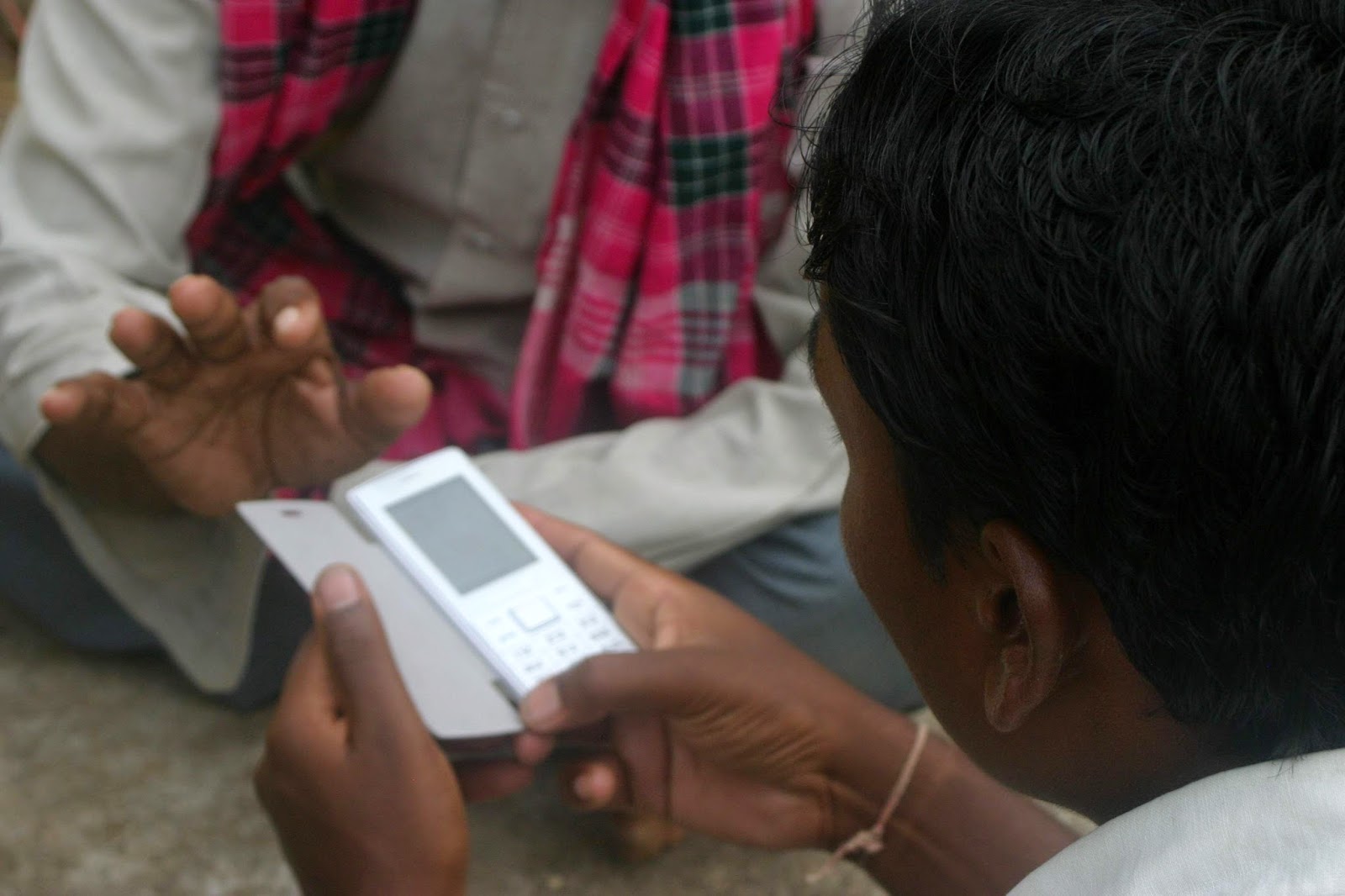
 This is why a three/four day workshop is a necessary thing. Users of CGNet often require a solid introduction to the service and clear instructions about using it. In the previous workshop in Narayanpur, teaching the young participants about how to identify themselves properly was a particular challenge yet even here in Kondagaon with a relatively more educated group, people must still be taught how to contribute useable reports.

For instance, one of our workers was talking to a group about the kind of problems they might have and one of them told him that she was a teacher and had not received her salary for three months. This is a personal problem and not technically within CGNet’s mission statement of giving a platform to community concerns. Yet, obviously, a teacher not receiving her salary affects the community at large and, after asking more questions, the worker learned that many teachers in her area were facing the same problems. Without too much work, it is easy to see that this problem is part of a larger one and this larger problem is one that CGNet is the perfect service to publicize.

A participant receives feedback on a practice recording